13% of Men
Even though fewer men die on average in Colombia than other middle-income countries, still 325 men are being killed by tobacco every week, necessitating action from policymakers.
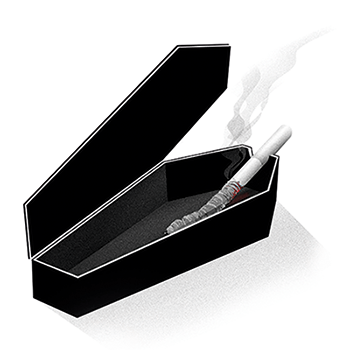
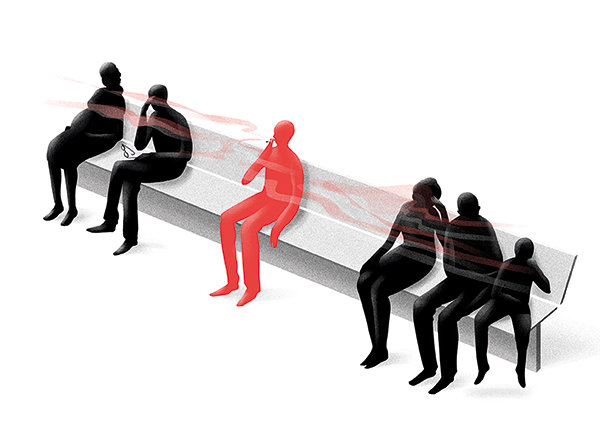
Menu Tobacco harms the health, the treasury, and the spirit of Colombia. Every year more than 26600 of it's people are killed by tobacco-caused disease, while more than 218000 children and more than 3948000 adults continue to use tobacco each day. Complacency in the face of the tobacco epidemic will ensure the tobacco industry continues to run roughshod over the lives of Colombia's citizens and ensure that tobacco's death toll will grow with each passing year. Tobacco control advocates must reach out to other communities to strengthen their efforts in this mortal fight.
% caused by tobacco: 2010
Even though fewer men die on average in Colombia than other middle-income countries, still 325 men are being killed by tobacco every week, necessitating action from policymakers.
More women die in Colombia than on average in middle-income countries.
Buying tobacco robs families of the resources they need to rise out of poverty. A smoker in Colombia would have to spend 3.6% the of national median income to purchase 10 of the cheapest cigarettes to smoke each day!
Cigarette butts are the most commonly discarded piece of waste worldwide. It is estimated that 1.69 billion pounds of butts wind up as toxic trash, which is roughly equivalent to the weight of 177,895 endangered African elephants.
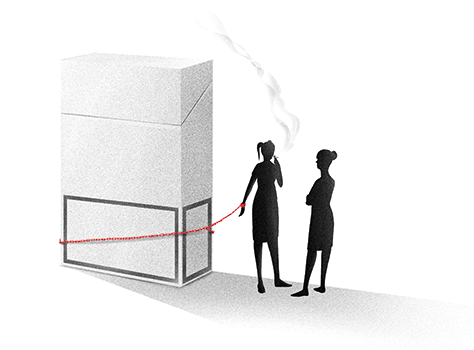
To find more customers, the tobacco industry markets its products aggressively to women and children.
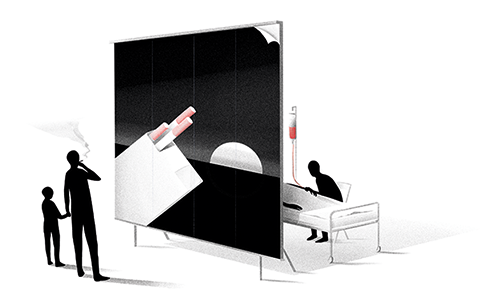
People living with mental illness are nearly twice as likely to smoke as other persons.
The combined revenues of the world's 6 largest tobacco companies in 2013 was USD342 Billion, equal to 93% of the Gross National Income of Colombia. The industry is a powerful force that does not fear the actions of smaller nation-states because their resources are often much larger. Larger economies have the opportunity to help the smaller allies face down this threat.
Even though fewer men smoke on average in Colombia than on average in middle-income countries, still 2934000 men still smoke cigarettes each day, the sign of an ongoing and dire public health threat.
Even though fewer women smoke on average in Colombia than on average in middle-income countries, still 1014000 women still smoke cigarettes each day, the sign of an ongoing and dire public health threat.
More boys smoke in Colombia than on average in middle-income countries.
More girls smoke in Colombia than on average in middle-income countries.
Because we do not know the prevalence of smokeless tobacco use in Colombia, future surveillance efforts must measure smokeless tobacco use prevalence in the population to help inform future tobacco control efforts.
Tobacco control policy is an excellent investment in the health of a country's population. According to the WHO, for less than COL$210 per person per year Colombia will be able to pay for the four 'best buys' in tobacco control policy, raising tobacco excise taxes, enforcing a comprehensive national smoke-free law and a ban on tobacco advertising and promotion, and mandating large graphic warning labels appear on tobacco product packaging. This small investment will reap enormous dividends in health and prosperity.
Current Policy in Colombia
| Smokefree HealthCare Facilities | Yes |
| Smokefree Universities | Yes |
| Smokefree Government Facilities | Yes |
| Smokefree Indoor Offices | Yes |
| Smokefree Restaurants | Yes |
| Smokefree Pubs and Bars | Yes |
| Smokefree Public Transport | Yes |
| All Other Indoor Public Places Smokefree | Yes |
| Funds for Smokefree Enforcement | No |
| Quitting Solutions | NRT and/or some cessation services (neither cost-covered) |
| National Quitline | No |
| Type of Warning Labels | |
Australia(best practice)Graphic | ColombiaGraphic |
| Percent of Pack Covered | |
Australia(best practice)83% | Colombia30% |
| Graphic Warning Rounds | |
Australia(best practice)2 | Colombia3 |
| Has Plain/Standardized Packaging | |
Australia(best practice)Yes | ColombiaNo |
| Ran a national anti-tobacco campaign during 2011 and 2012 | |
WHO Best PracticeYes | ColombiaYes |
| Part Of A Comprehensive Tobacco Control Program | |
WHO Best PracticeYes | ColombiaNo |
| Pre-Tested With The Target Audience | |
WHO Best PracticeYes | ColombiaNo |
| Target Audience Research Was Conducted | |
WHO Best PracticeYes | ColombiaYes |
| Aired On Television And/Or Radio | |
WHO Best PracticeYes | ColombiaYes |
| Utilized Media Planning | |
WHO Best PracticeYes | ColombiaYes |
| Earned Media/Public Relations Were Used To Promote The Campaign | |
WHO Best PracticeYes | ColombiaYes |
| Process Evaluation Was Used To Assess Implementation | |
WHO Best PracticeYes | ColombiaYes |
| Outcome Evaluation Was Used To Assess Effectiveness | |
WHO Best PracticeYes | ColombiaNo |
| Number of Bans on Forms of Direct Advertising | 3 of a possible 7 bans |
| Number of Bans on Forms of Indirect Advertising | 7 of a possible 7 bans |
| Ad Ban Compliance Percent | 70% self-rated compliance |
| Excise Tax as a % of Cigarette Price | |
WHO Benchmark75% of Retail Price is Excise Tax | Colombia30% of Retail Price is Excise Tax |